
ISO 12944 Is Being Revised, SSPC Numbers Stayed: How to Write the Spec
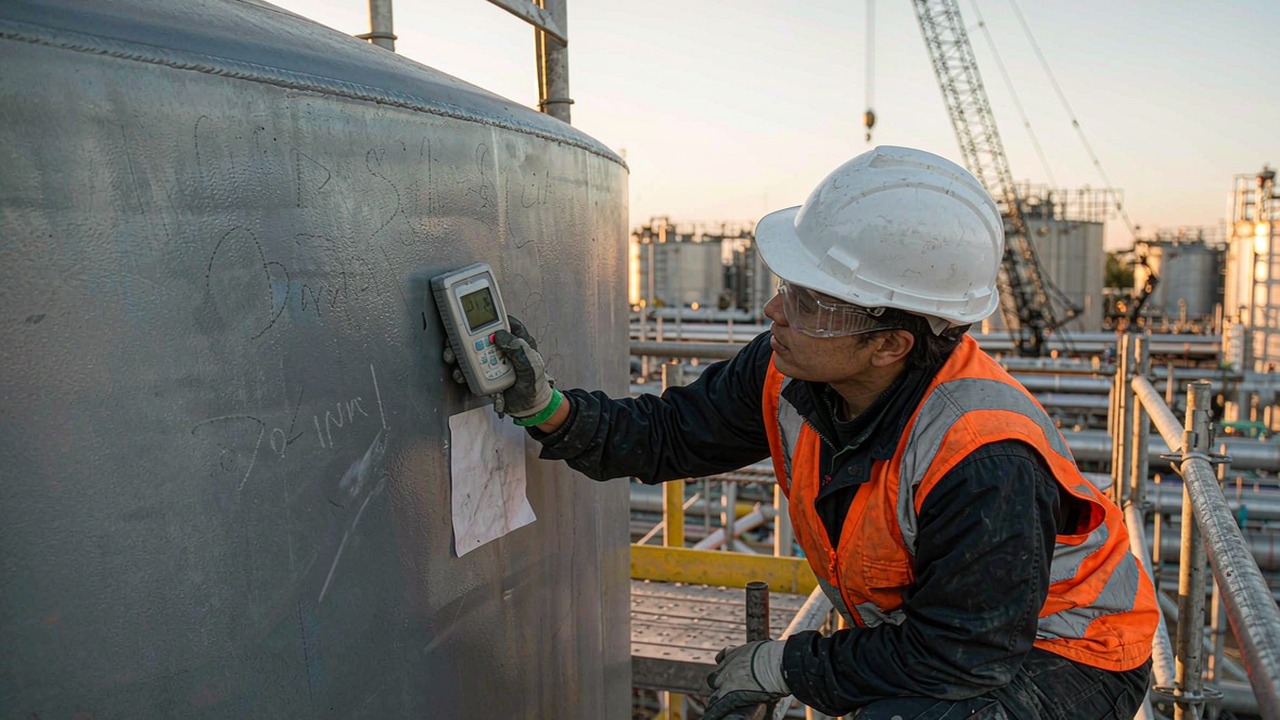
Start with the conclusion: standards are being revised and designations are being consolidated, and neither changes how corrosivity is judged. What changes is how the phrase you quoted gets applied. One missing year in a specification can move total film thickness by tens of microns between two bids; one missing level in the qualification clause can start an argument on acceptance day. The two lines are separated below, followed by a checklist you can apply today.
The technology is not what moved, the edition is
In the catalogue of ISO/TC 35/SC 14, the current editions of ISO 12944 Parts 1 to 5 are still dated 2017, 2017, 2017, 2017 and 2019, all carried at status 90.92, which means under review. Alongside them sit revision projects at working draft and committee draft stage, with Part 5 already at committee draft. None of this overturns the C1 to CX framework. What is being realigned is wording, the way durability is stated, and the link to the various test methods.
On site the effect is close to zero; in a tender it appears immediately. A specification that says only in accordance with ISO 12944-5 lets every bidder speak from the copy on their own desk. The 2017 and 2019 editions do not recommend identical system build-ups and film thickness ranges, so for the same steel two bids can end up tens of microns apart in total dry film thickness. Such gaps have to be checked system by system, never estimated from memory.
There is also a phrase often mistaken for rigour: the edition in force on the bid closing date. It moves the whole judgement onto the bidder. Whoever holds the newer copy gains the interpretative advantage; whoever holds the older one may price lower and then be judged non-conforming at acceptance. The sentence saved in drafting is usually paid for by the applicator in rework.
The numbers did not change, and that was deliberate
In 2021 NACE International and SSPC merged into AMPP. Many owners assumed the standards would be renumbered. The opposite happened: existing standards keep their original designations, and a revised edition changes only the cover, the copyright page and the year. SSPC-SP 10 / NACE No.2 is still called exactly that, and so is NACE SP0169. Stable numbers exist so that technical language already written into contracts does not expire overnight.
Only standards developed after the merger carry an AMPP designation, such as AMPP TM21510. An AMPP prefix therefore does not mean a new version of an SSPC document, and an SSPC prefix does not mean the document is obsolete. Whether a document is out of date depends on the year and the revision status, not on the prefix.
Qualifications follow the same logic. The former SSPC QP contractor accreditation is now administered as AMPP QP; the inspector programme was relaunched in April 2022 as AMPP CIP Levels 1, 2 and 3, with the old SSPC PCI folded into it. A tender asking for a NACE certified inspector is not wrong, but it is not specific: it may mean coating inspection, cathodic protection or corrosion technology, three different ladders with different people and different scope.
In February 2026 AMPP signed a distribution partnership with BSB Edge, placing its standards in a multi-publisher subscription platform and improving access in India, the GCC and China; 2026 also marks five years since the merger. Easier access has a side effect: three different years of the same standard can now sit in the same office. That is where the real governance work begins.
Where disputes actually start: thickness and surface preparation
For film thickness, the North American route defaults to SSPC-PA 2: five spot measurements per 9.3 square metres, each spot being the average of three gauge readings inside a circle of about 4 cm; at the default restriction level no spot may fall below 80 percent of the specified minimum or above 120 percent of the specified maximum, and the area average must sit inside the range. This governs sampling and acceptance, not instrument calibration.
The ISO route uses ISO 19840, and the rules look different: the mean must reach the nominal dry film thickness, no single reading may fall below 80 percent of nominal, no more than 20 percent of readings may fall below nominal, and a profile correction of 10, 25 or 40 microns applies to fine, medium and coarse blast. Some project specifications then add their own 85/15 rule on top. Each rule has a pedigree; none is inherently right.
Same blasted plate, same gauge, same data set: PA 2 may pass it, ISO 19840 may call part of it over-thick, and a project-specific 85/15 may call it thin. Who decides? Whoever wrote the specification. That is why the words thickness conforms are the beginning of a dispute rather than a conclusion.
Surface preparation has the same structure. SSPC-SP 10 / NACE No.2 and ISO 8501-1 Sa 2 and a half describe one condition in two languages and can be matched from photographs by eye. Soluble salts, profile depth and dust are governed by separate documents, the ISO 8502 and ISO 8503 series. Specifying blast to Sa 2.5 without a salt limit accepts only half of the requirement, and the other half tends to resurface when the coating fails early.
A five-point check you can apply today
First, add the year after every standard reference, or write one sentence for the whole document stating that the edition in force on the bid closing date applies. Pick one approach, never mix them. Mixing is the worst case, because the reviewer and the bidder will each quote a different clause.
Second, write surface preparation in three layers: which edition defines the cleanliness grade, which method measures soluble salts, what the ceiling is in micrograms per square centimetre, and what profile range is required. With all four stated, the blasting crew knows what to achieve.
Third, name the acceptance rule for film thickness: PA 2 at the default level, ISO 19840, or a project-specific 85/15. State whether the profile correction is a deduction from readings or an adjustment of the instrument. Leave this out and anyone can pick holes in the inspection report.
Fourth, separate company qualification from individual qualification: companies are read by QP category, individuals by CIP level. Do not settle for a phrase about relevant qualifications. Once it is specific, the certificates submitted by bidders have something to be checked against.
Fifth, keep the legacy numbers but add the latest revised edition, and state in the clarifications which clauses the equivalence is based on. Deleting old numbers confuses contractors who have worked to them for years; keeping them without a year invites an argument at acceptance.
What it means for price and risk
The same system priced against the 2017 edition and against the 2019 edition consumes different quantities; priced at the default PA 2 level and at a tighter restriction level, it carries a different probability of rework. The clearer the year in the specification, the more comparable the bids and the smaller the spread. Where the year is vague, the cheapest bid is often not cheaper at all, it simply leaves the uncertainty for later.
What a supplier fears most is the sentence: just follow the standard. A standard has an edition, a system, a default level and optional levels, so that sentence says nothing. Clarifying three things, which edition, which acceptance rule, and whether qualification is by company or by person, is worth more than a price negotiation, because a negotiation cannot remove rework.
Solvent-borne and high-solids systems owe their application latitude to controlled parameters: film thickness, thinning ratio, recoat interval, each written into the standard and into the product data sheet. Standards get revised and numbers get consolidated, but the parameters do not loosen as a result. Writing the references correctly keeps the risk on paper instead of leaving it for acceptance day.