
Thinner dosage and thinner type: get this wrong and the whole layer is wasted
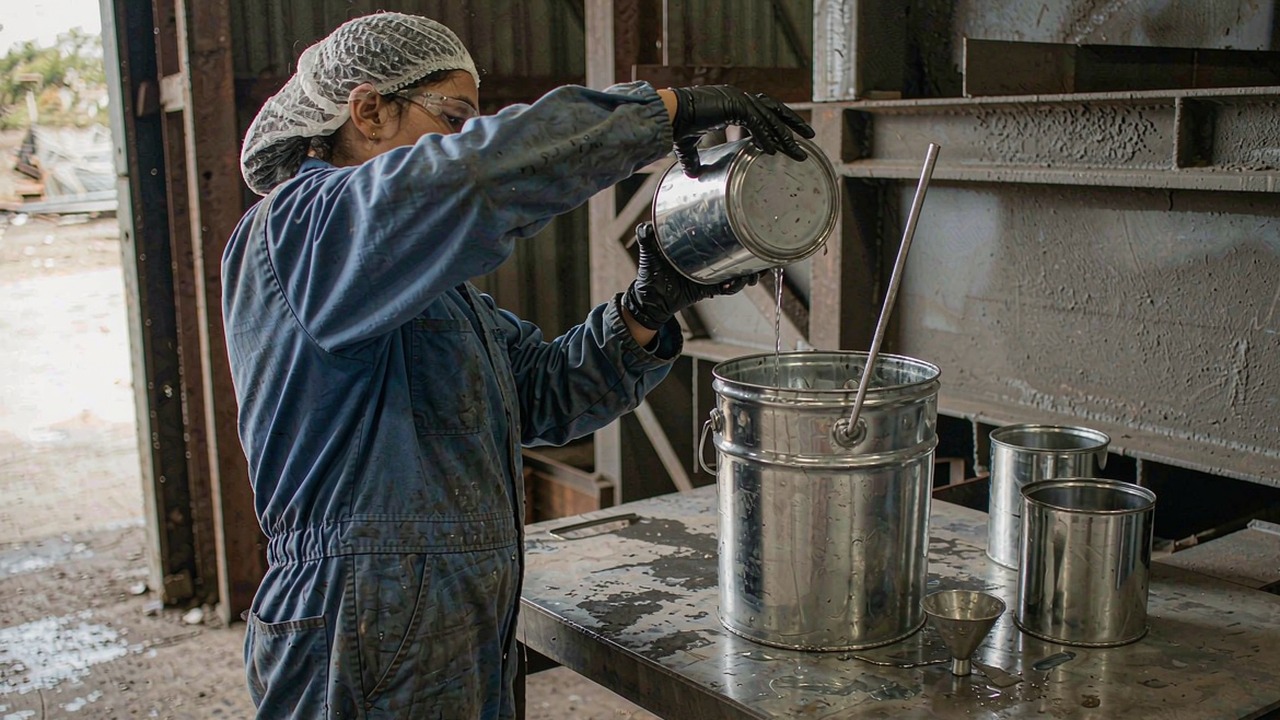
On a coating site, thinner is almost the only material anyone feels entitled to handle. The paint is thick, so add a little. It is hot, so add a little. It will not spray, so add a little more. Once it looks right, the gun goes on. But thinner is not water. It is part of the formulation: dissolving power, evaporation rate and compatibility with the resin and the hardener are all designed in. The half-litre you pour in does not change one number called viscosity; it changes the whole chain from flow-out to cure.
This matters most in solvent-borne high-solids systems. High solids means there was little solvent to begin with, so the formulator left a narrow margin for the applicator. The same dilution ratio that makes a low-solids paint merely thinner can, in a high-solids product, cost you film thickness, leave solvent trapped in the film, and knock a grade off adhesion. What follows is the failure pattern seen most often on site.
Thinner changes the formulation, not just the viscosity
The viscosity of a paint is set by resin molecular weight, pigment volume concentration, and the type and ratio of solvents. What the TDS gives you is a recommended thinner type and a maximum addition ratio. Those two numbers are not suggestions; they are the edge of the formulation. Step past that edge and the paint still sprays, but the film that lands on the steel is no longer the film that was designed.
Dissolving power is the part people overlook. Epoxy systems usually run on xylene and butanol, polyurethane on ester and aromatic blends, some inorganic zinc silicates on alcohols. Swapping them looks harmless because viscosity drops either way, but a mismatch throws the resin out of solution while the film is still wet. It shows up later as loss of gloss, a white haze, or patchy adhesion. Nothing appears on the day of application; it appears a month later when someone pulls a dolly.
There is also the category that works but is wrong: solvent recovered from gun washing, a thinner drum left open for half a year, cheap thinner with a high water or alcohol content. The first carries old resin and pigment back into your pail. The second has absorbed moisture. Solvent-borne systems are extremely sensitive to water, and a trace of it in a polyurethane topcoat is exactly where those fine, dense microbubbles come from.
Three common mistakes, and how each one fails
The first is overdose. The site logic is that more thinner sprays better. It does, but solids by volume fall in proportion: a pass that would have laid down 80 microns lays down around 65 once you add twenty percent thinner, and the wet film stays open longer, so edges sag. Low film thickness is invisible. The surface looks perfect until salt spray, or until the first rust bloom a year later.
The second is the wrong type. Aromatic, aliphatic, alcohol, ester and ketone sit several grades apart in dissolving power. Put a weak solvent into a strong-solvent system and you get false body: the paint looks thick because the resin never fully dissolved. Put a strong solvent into a weak system and it bites into the coat below, re-dissolving the intermediate, so the boundary between layers disappears.
The third is adding as you spray, without measurement. A graduated cup or a gut feeling decides whether the batch is reproducible. The same pail at five percent in the morning and twelve percent in the afternoon gives two colours, two gloss levels and two film thicknesses, meeting in a line you can see on the elevation. When it has to be reworked, nobody can say which section went wrong, because nothing was written down.
Evaporation gradient: fast dry is not through dry
A thinner is rarely one solvent. It is a blend of fast, medium and slow grades. The fast ones stop the wet film from sagging; the slow ones keep the film open long enough to carry residual solvent out from the bottom. Disturb that gradient and the failure follows.
Too much fast solvent and the surface skins over while the solvent underneath cannot escape. You get pinholes and a film that is dry to touch but soft under the thumb, with low pull-off values and blisters the moment it meets a chemical. Too much slow solvent and the film stays open, collects dust, sags and tears on verticals, and pushes the recoat window out, which then pushes the schedule.
Temperature moves the same judgement. In the cold, viscosity rises and someone reaches for thinner to improve flow. But at low temperature the solvent was already leaving slowly; adding more stretches the drying time further and cuts film build on top of that. The correct response in winter is to raise paint and ambient temperature and use a low-temperature hardener, not to fight it with solvent.
Setting a number on site: from one TDS line to a film thickness check
In practice there are three steps. Buy the thinner type named in the TDS rather than a universal substitute. Measure with a graduated cup and write the ratio into the shift record instead of relying on feel. Then re-check viscosity or wet film thickness after adding, so the batch is confirmed by data rather than by eye.
If the job genuinely needs more than the recommended ratio before it will spray, the problem is not the thinner. It is the equipment or the temperature: nozzle too small, pump pressure too low, paint too cold, hose too long. The right move is to fix the equipment, not to keep pouring solvent into the pail. Used as a spraying lubricant, thinner saves time today and mortgages film thickness, adhesion and weather resistance tomorrow.
One line to close on: thinner is part of the formulation, not a convenience fluid. How much goes in, and which grade, should be a recorded decision, not a reflex of the wrist.