
Steel box girder system for a sea-crossing bridge
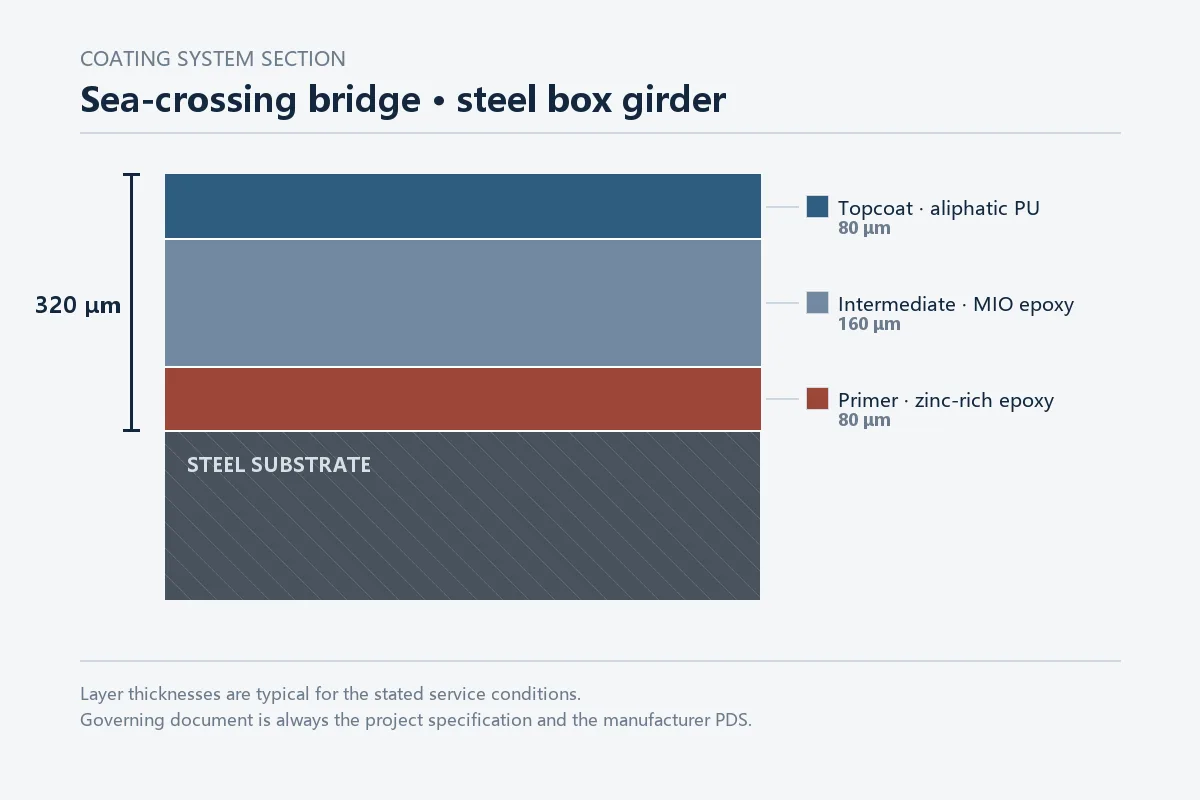
Coating system
| Layer | Material / system | DFT | Standard | |
|---|---|---|---|---|
| Primer | Epoxy zinc-rich primer, zinc content per specification | 80 μm | ISO 12944-5 | |
| Intermediate | Micaceous iron oxide epoxy build coat | 160 μm | ISO 12944-5 | |
| Topcoat | Aliphatic polyurethane topcoat | 80 μm | ISO 12944-5 | |
| Total system DFT | ≥ 320 μm | |||
Steelwork in marine atmosphere, durability C5-M. Welds and edges get an extra epoxy sealer coat.
A sea-crossing bridge steel box girder is exposed to marine atmosphere and splash-zone attack; chloride ingress and wet-dry cycling drive coating failure. The system was specified to ISO 12944 C5-M durability for girder welds, edge beams and access ways.
The system uses an epoxy zinc-rich primer, a micaceous iron epoxy intermediate build coat and an aliphatic polyurethane topcoat for colour and gloss retention. Welds and edges receive an extra epoxy sealer coat, with total DFT above 320 μm.
Welds were abrasive-blasted to Sa2.5; primer and intermediate coats were applied in-shop, leaving only topcoat and touch-up for site work to minimise high-altitude operations. Acceptance included DFT spot checks, adhesion and visual inspection.
The build-ups above are typical systems compiled from ISO 12944 and the relevant product technical data sheets; film thicknesses are reference values for the service conditions stated. For any specific project, the design specification, tender documents and the manufacturer's latest PDS govern. Actual performance depends on surface preparation grade, ambient conditions during application and recoat intervals.